
Dam desilting and pond dredging, without draining
Dredging and excavation that remove light silt and organic sludge from dams, ponds and basins, winning back depth and storage. The water stays where it is.
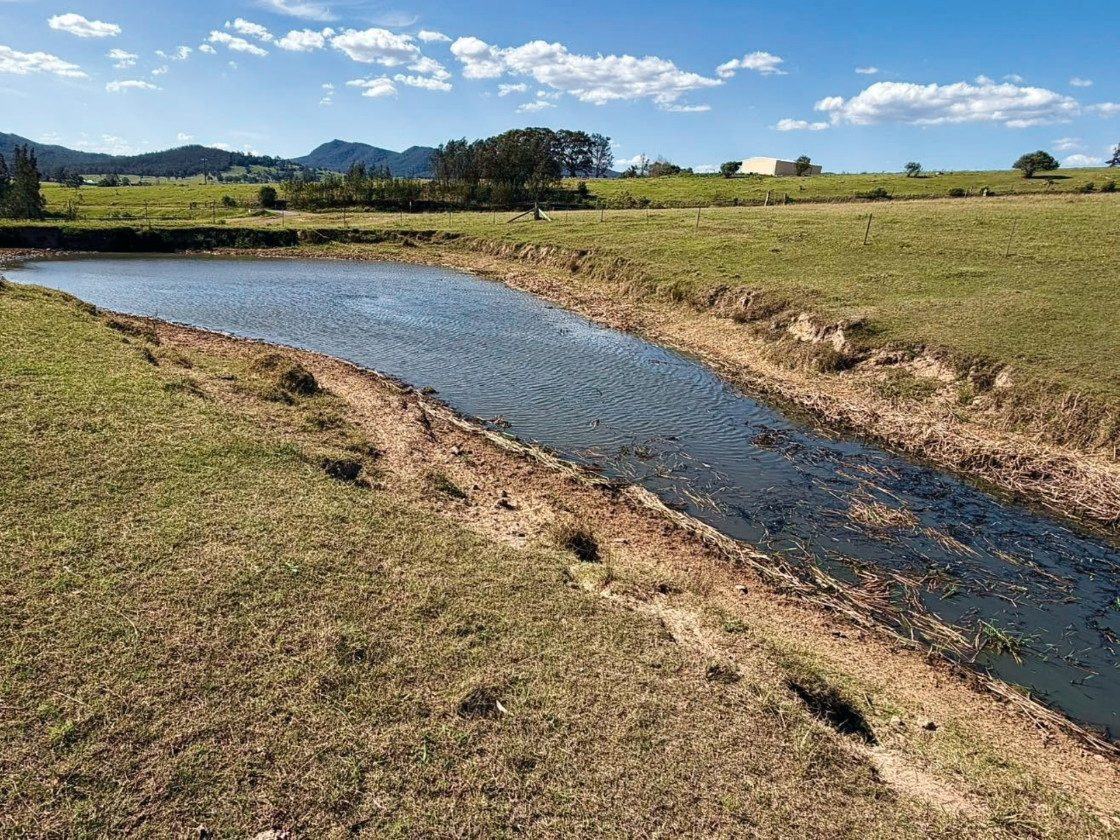
Signs your dam is silting up.
Every storm adds silt. The dam holds a little less each year.
- It holds less waterEven large dams lose around 0.36% of their storage to silt every year. Small dams with bare catchments can fill faster.
- The water turnsOld silt holds nutrients that feed algae. Decaying matter uses up oxygen.
- Inlets and pumps clogSilt builds up around inlets, pipes and pump intakes.
- It spills soonerWith less storage, it fills and spills sooner in heavy rain.
Sources: UNU-INWEH (2023), Global water storage loss to sedimentation; Søndergaard et al. (2001), Retention and internal loading of phosphorus in shallow lakes; NSW DCCEEW, About blackwater.
How we desilt with the water in
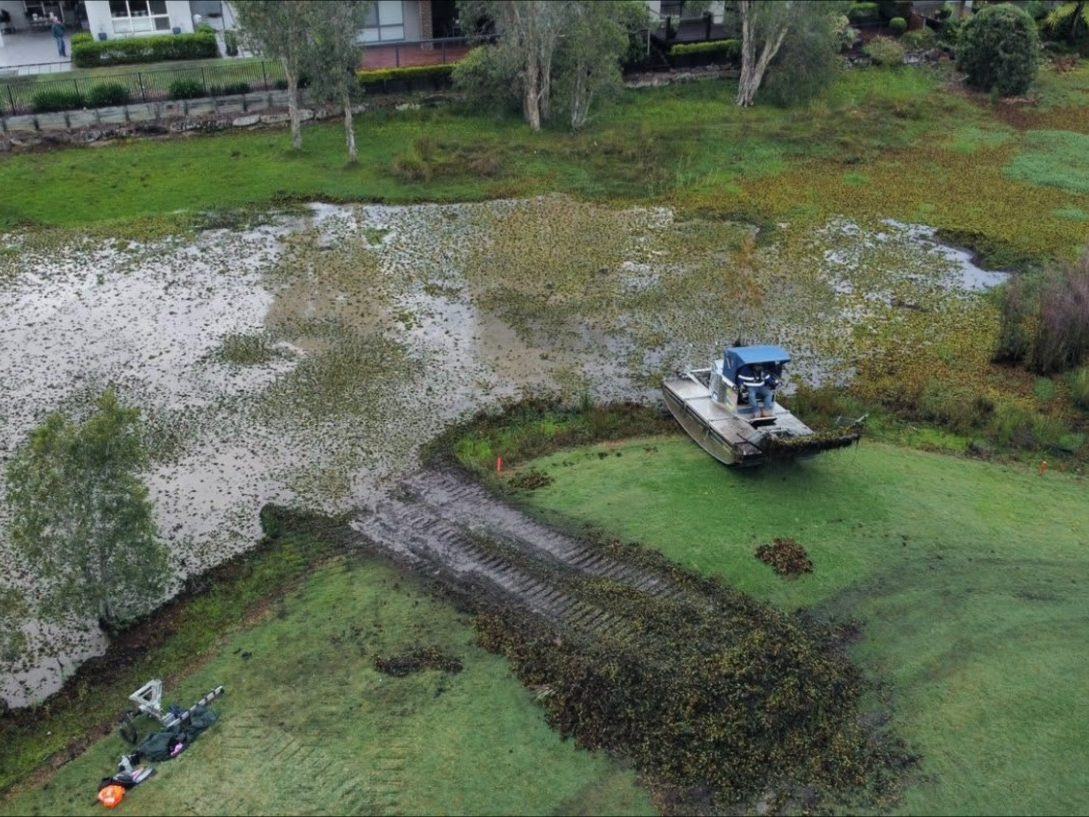
The dredge pump draws up light silt and soft organic sludge, to about 1.6 m below the surface, and pipes it to a settling area on your site.
Near the edges and inlets, the digger works to about 1 m. The water stays in the dam, so it remains available for stock and irrigation. Read: can you desilt a dam without draining it?
When we are not the right fit: a dry dam, heavy clay or a full reshape is a job for an excavator. We will tell you so at the site visit.
The usual way, and ours
Draining and digging is the standard method. It works, but it takes the water out of use.
Drain and dig
- The dam or basin is drained first, then left to dry.
- An excavator digs from the bank.
- The water is out of use until it refills.
Cleared with the water in
- The water stays in place the whole time.
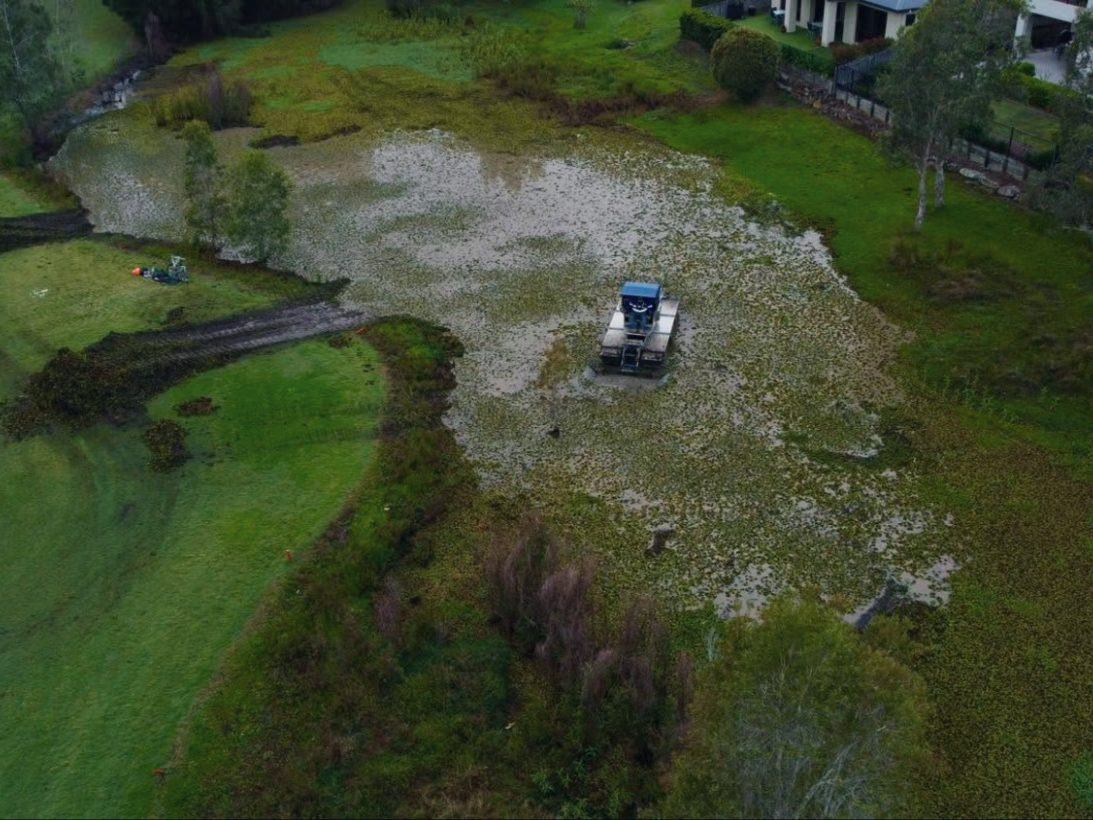
- The machine works across the whole water surface, not just from the bank.
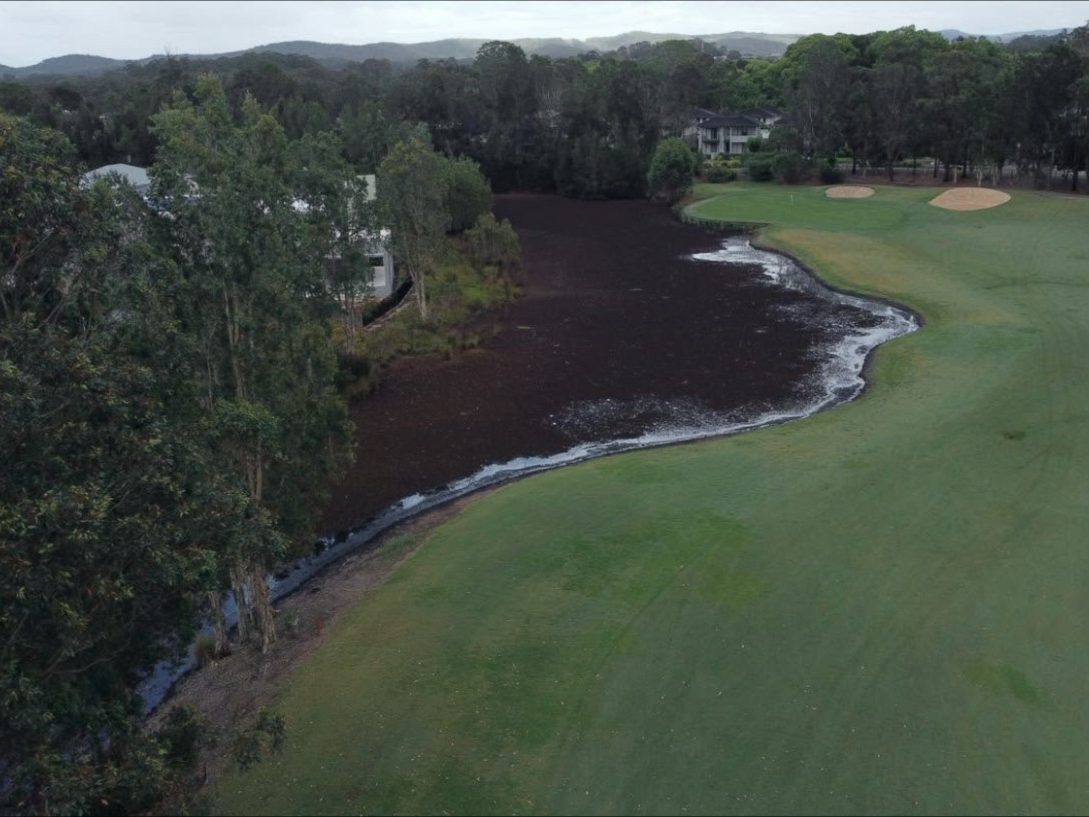
- Silt stays on your site. Weed is stockpiled on the bank.
Not every job suits an amphibious machine. If yours does not, we will tell you at the site visit.


Common questions
Do you need to drain the dam or pond?
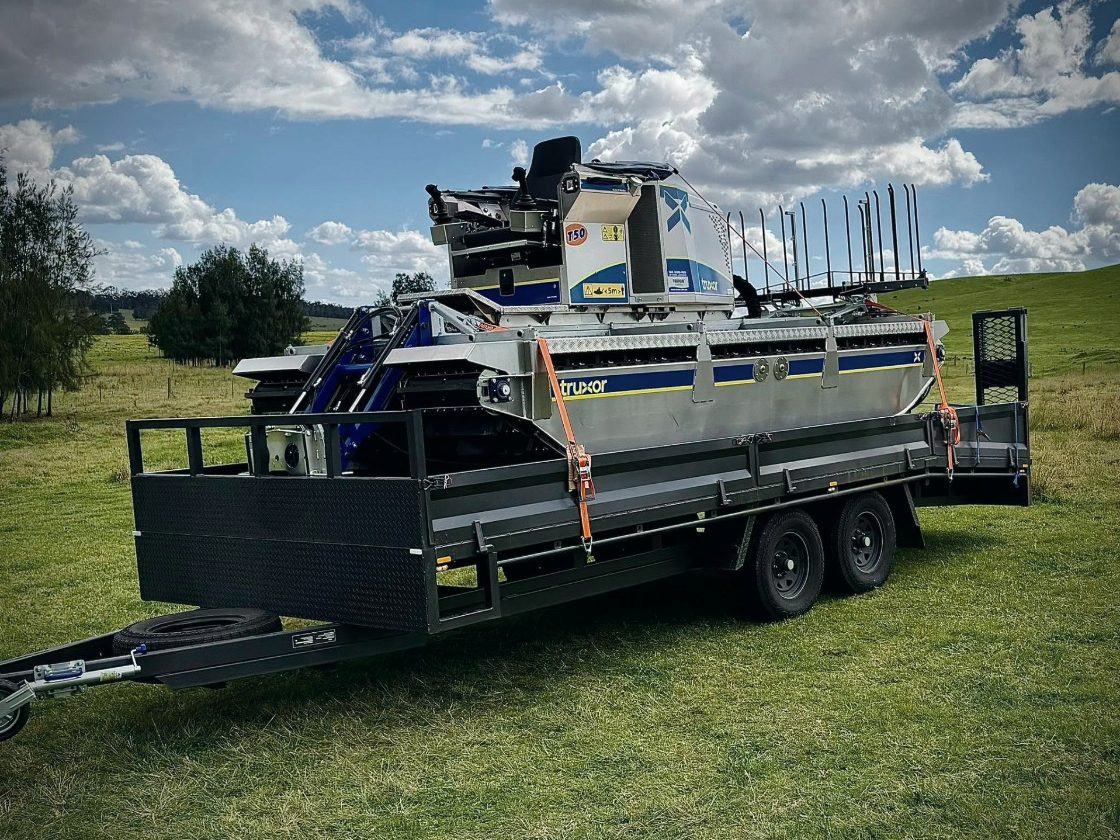
No. The Truxor T50 floats and works on the water, so your dam, pond or lake stays full while we work.
How deep can you work?
The digger works to about 1 m near the edges. The dredge pump removes light sediment to about 1.6 m. At the site visit we will tell you plainly whether the machine suits your job.
How much room does the settling area need?
It depends on the volume of silt. We agree the location and size with you before work starts.
What happens to the weed and silt you remove?
Dredged silt stays on your site, in a settling area we agree before work starts. Cut weed is stockpiled on the bank where we agree with you.
Will the machine damage my turf or banks?
At about 1.5 tonnes, the Truxor T50 is light enough to cross turf and banks. We plan the access route with you at the site visit.
How much does pond or dam cleaning cost?
It depends on the size of the water body, how much weed or silt there is, access for the machine, and where material can go on site. That is why we quote after a free site visit, in writing, with no obligation.
Book a free site visit.
Tell us where the water body is and what is happening. We will arrange a visit and follow up with a written quote.
0411 824 790admin@sedsolve.com.au
We come to you, from Northern Sydney and the Central Coast up to Forster, and Newcastle to Scone.
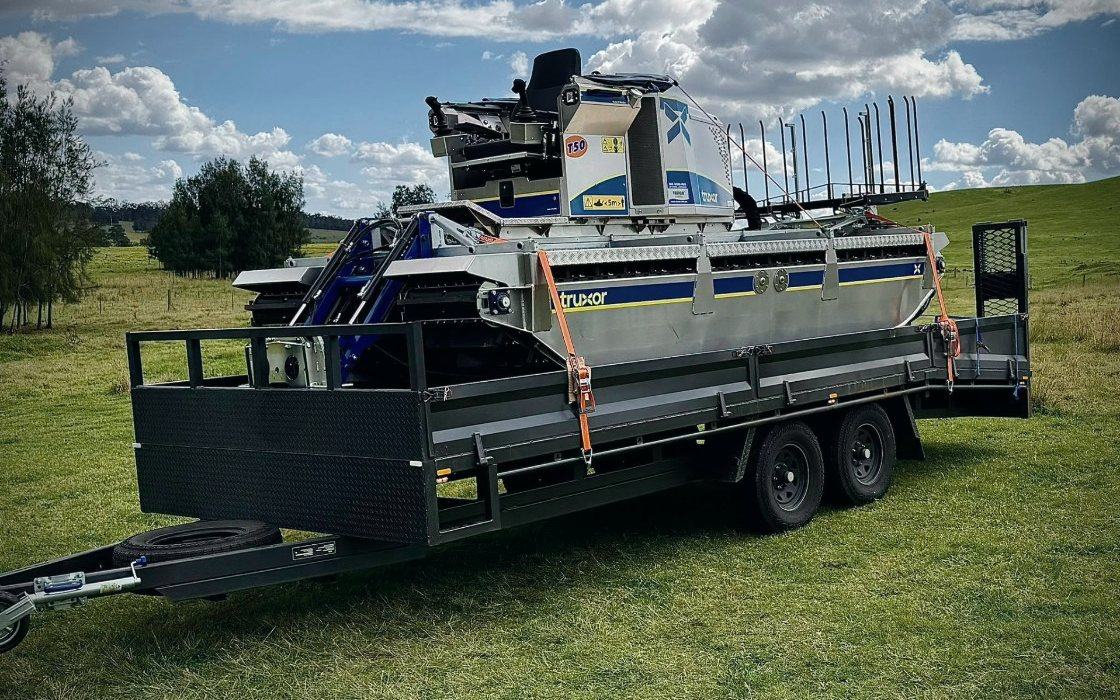
The Truxor T50 on its trailer.