
Aquatic weed removal in Newcastle and the Hunter
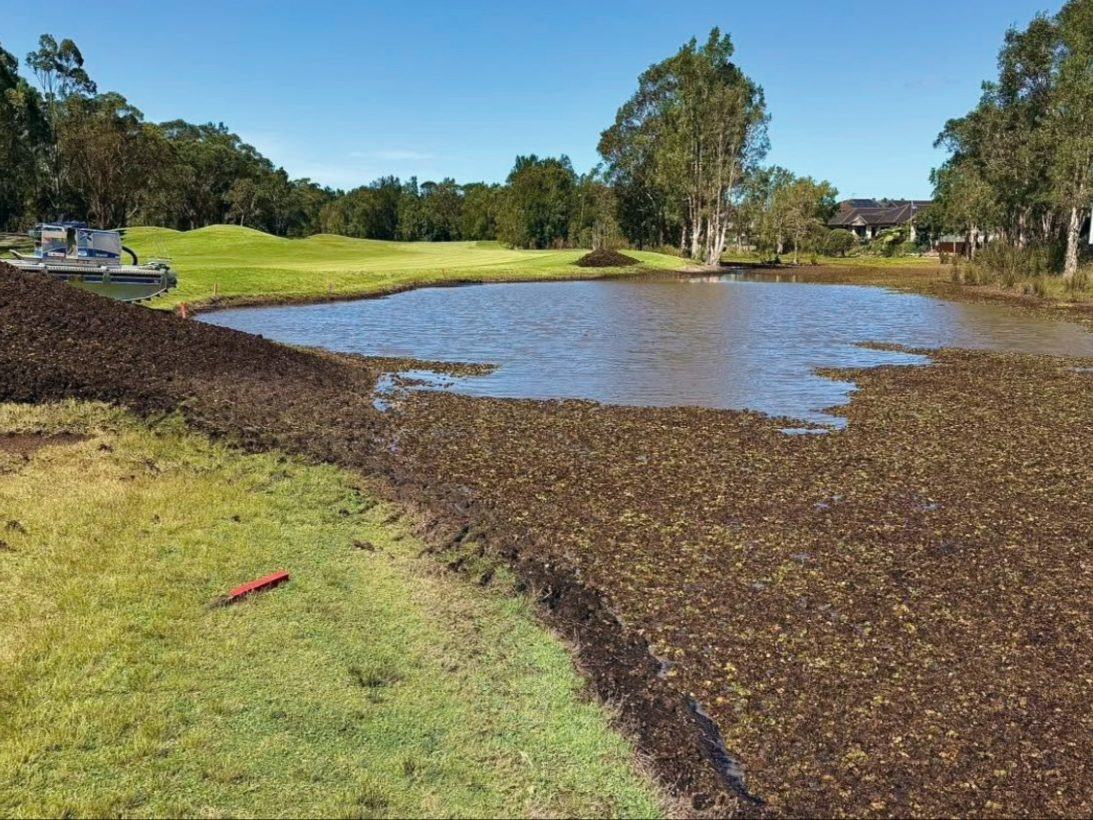
Salvinia, water lilies and floating weed mats cut and lifted out of your pond, dam or lake. No draining, and mechanical removal first to keep chemical use to a minimum.
Weed builds up fast.
A few patches in spring can cover a pond by summer.
- It spreads in daysSalvinia can double in under three days in ideal conditions. Other aquatic weeds can double their mass every 5 to 10 days.
- It starves the waterFloating mats block light. Rotting weed uses up the oxygen fish need.
- It blocks pumps and outletsWeed mats choke pumps, pipes and outlets.
- It spoils the siteLakes look neglected, hazards become unplayable and views disappear.
Sources: NSW DPI WeedWise, Salvinia; City of Newcastle, Aquatic weeds; NSW DCCEEW, About blackwater.
How we remove it
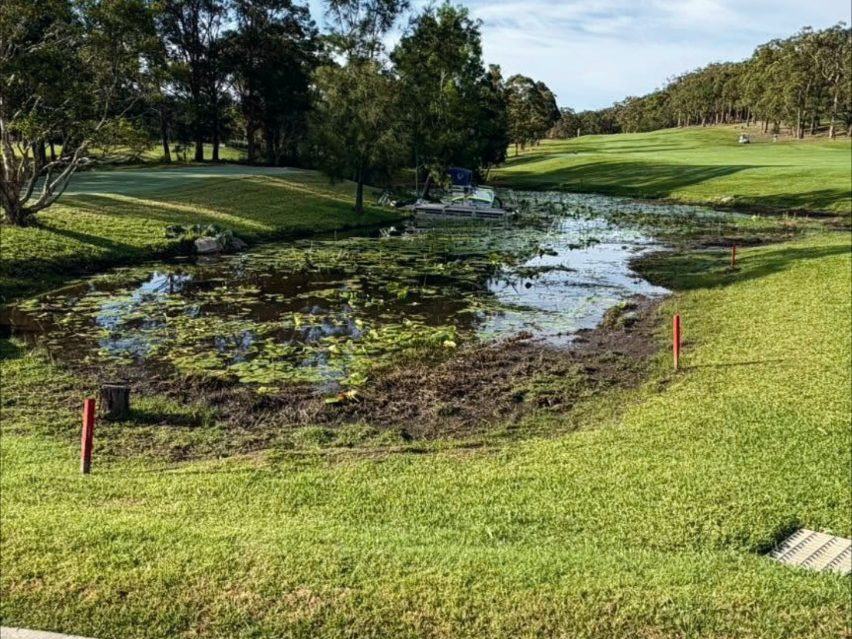
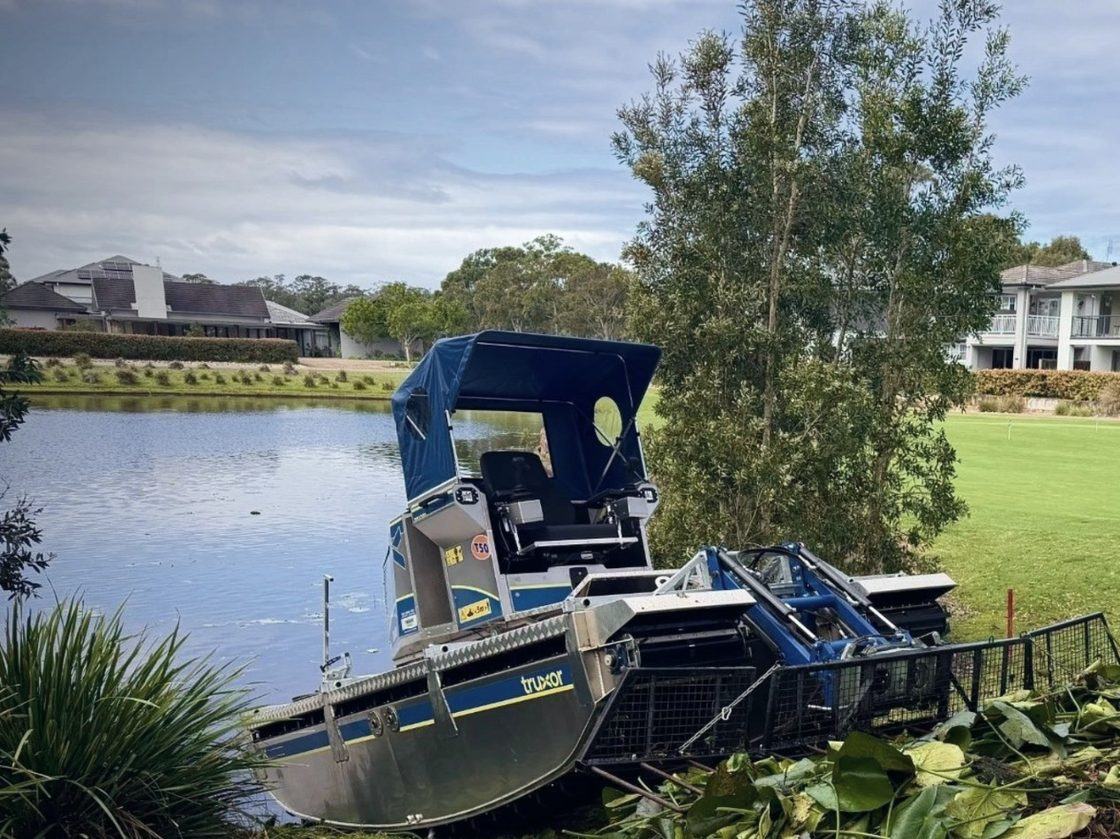
The Truxor T50 drives into the water and floats. It cuts the weed mat, gathers it and walks it straight out onto the bank.
For water lilies, the miller uproots the plants rather than trimming them at the surface. Related: reed and bank vegetation.
Cut weed is stockpiled on the bank, where we agree with you. On established infestations, we finish with targeted spraying once what is left is too scattered to harvest.
Spray the whole mat, or lift it out first?
Spraying a full mat is often the first idea. In water it has real drawbacks.
Spray the whole mat
- Treating a full mat takes a lot of chemical.
- Sprayed weed dies in the water and rots, using up oxygen.
- Some public land managers rule it out because of the environmental risk.
Lift it out first
- The bulk of the mat is lifted out, so it cannot rot in place.
- Scattered remnants are finished with targeted spraying.
- Far less chemical than treating the full mat.
 Case study · Kooindah Waters · Central Coast NSW
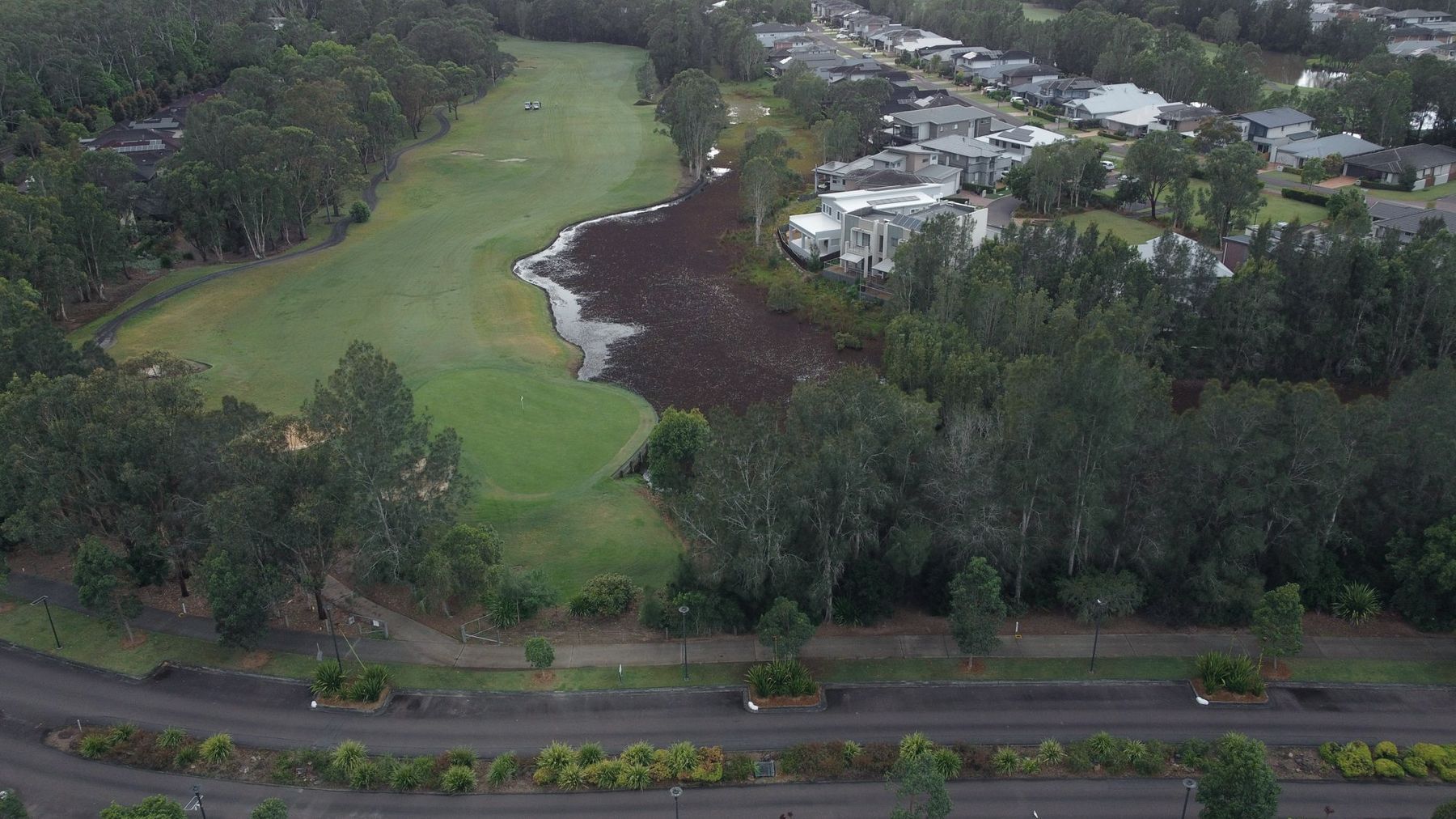
Golf balls sat on top of the weed.
Salvinia had been left to grow for years. We are clearing it from the water with the Truxor, with no draining, on a staged program.
- SiteGolf course lake beside a residential estate
- ProblemSalvinia left to grow for multiple years
- MethodTruxor amphibious harvesting, no draining
- ResultScheduled removal, then targeted spraying

Common questions
Can you remove salvinia?
Yes. The Truxor cuts and gathers the mat and walks it out onto the bank. Established infestations need a staged program: scheduled harvesting to remove the bulk, then targeted spraying once what is left is too scattered to harvest efficiently.
Isn’t mechanical removal only for small infestations?
Hand removal is. The Truxor cuts, gathers and lifts whole mats out onto the bank, so it suits lakes and dams where hand removal does not. If another method suits your site better, we will tell you.
Can you remove water lilies?
Yes. The miller attachment uproots lilies rather than trimming them, and the material is brought out onto the bank.
Do you use herbicide?
Only as a final, targeted step. The bulk of the weed is cut and lifted out mechanically, which keeps chemical use to a minimum and stops dead weed rotting in the water. On established infestations, once what is left is too scattered to harvest efficiently, it is finished with targeted spraying, using far less chemical than treating the full mat.
What happens to the weed and silt you remove?
Dredged silt stays on your site, in a settling area we agree before work starts. Cut weed is stockpiled on the bank where we agree with you.
How much does pond or dam cleaning cost?
It depends on the size of the water body, how much weed or silt there is, access for the machine, and where material can go on site. That is why we quote after a free site visit, in writing, with no obligation.
Book a free site visit.
Tell us where the water body is and what is happening. We will arrange a visit and follow up with a written quote.
0411 824 790admin@sedsolve.com.au
We come to you, from Northern Sydney and the Central Coast up to Forster, and Newcastle to Scone.
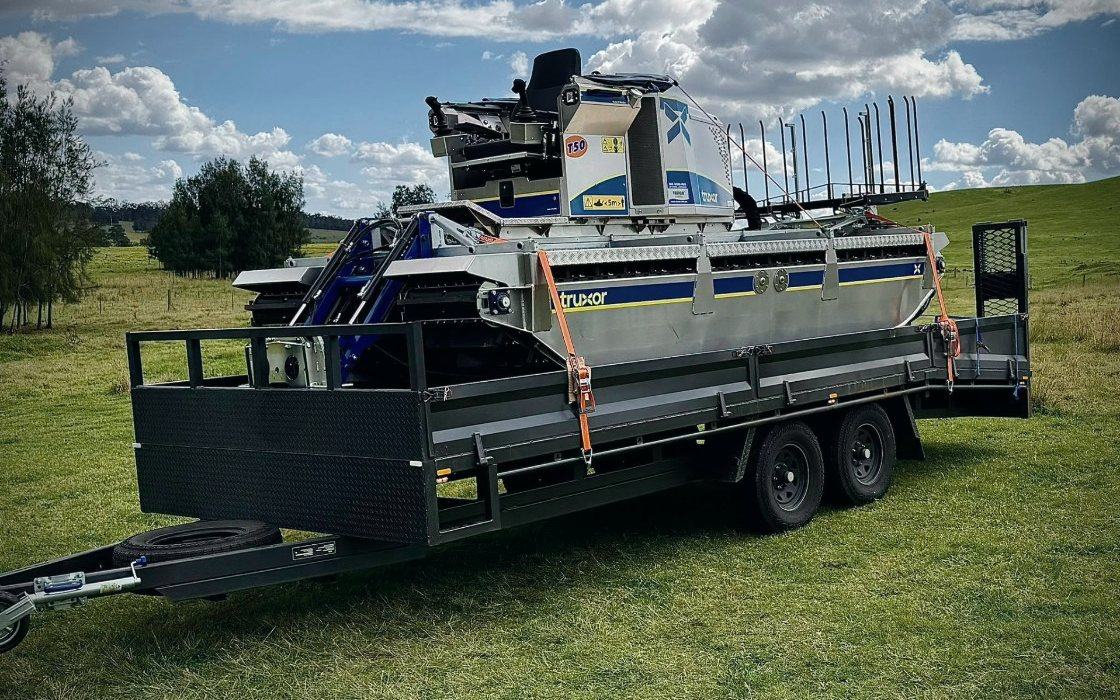
The Truxor T50 on its trailer.