
Frequently asked questions
Straight answers about how we work, what affects the cost and where we go.
Do you need to drain the dam or pond?
No. The Truxor T50 floats and works on the water, so your dam, pond or lake stays full while we work.
Do you use herbicide?
Only as a final, targeted step. The bulk of the weed is cut and lifted out mechanically, which keeps chemical use to a minimum and stops dead weed rotting in the water. On established infestations, once what is left is too scattered to harvest efficiently, it is finished with targeted spraying, using far less chemical than treating the full mat.
What happens to the weed and silt you remove?
Dredged silt stays on your site, in a settling area we agree before work starts. Cut weed is stockpiled on the bank where we agree with you.
How much does pond or dam cleaning cost?
It depends on the size of the water body, how much weed or silt there is, access for the machine, and where material can go on site. That is why we quote after a free site visit, in writing, with no obligation.
How deep can you work?
The digger works to about 1 m near the edges. The dredge pump removes light sediment to about 1.6 m. At the site visit we will tell you plainly whether the machine suits your job.
Will the machine damage my turf or banks?
At about 1.5 tonnes, the Truxor T50 is light enough to cross turf and banks. We plan the access route with you at the site visit.
Can you remove salvinia?
Yes. The Truxor cuts and gathers the mat and walks it out onto the bank. Established infestations need a staged program: scheduled harvesting to remove the bulk, then targeted spraying once what is left is too scattered to harvest efficiently.
Isn’t mechanical removal only for small infestations?
Hand removal is. The Truxor cuts, gathers and lifts whole mats out onto the bank, so it suits lakes and dams where hand removal does not. If another method suits your site better, we will tell you.
Can you remove water lilies?
Yes. The miller attachment uproots lilies rather than trimming them, and the material is brought out onto the bank.
Can you cut reeds along the bank?
Yes. The reed cutter works in shallow water or on dry ground. The flail mulcher handles bank vegetation with woody stems up to about 25 mm.
How often should a pond or sediment basin be cleaned?
Melbourne Water’s guidance for sediment basins is every 2 to 5 years, but your catchment matters more. Weed-prone ponds do best with regular visits.
How much room does the settling area need?
It depends on the volume of silt. We agree the location and size with you before work starts.
Do we need approvals for the work?
It depends on the water body and who manages it. We raise it at the site visit so it is settled before work starts.
What documents do you provide before work starts?
A written scope, method and timing, our safety management system, and certificates of insurance. Operators complete your site inductions and permits.
Can you work on mine and industrial sites?
Yes. Our directors bring more than 40 years’ combined mining experience, we run a mine-ready safety management system, and our operators complete your inductions and permits.
Are you insured?
Yes. We hold public liability, workers compensation, CS Mines and equipment insurance. Certificates are provided on request before work starts.
Which areas do you cover?
We cover Northern Sydney and the Central Coast up to Forster, and Newcastle to Scone. Outside these areas? Call us and we will tell you if we can help.
Book a free site visit.
Tell us where the water body is and what is happening. We will arrange a visit and follow up with a written quote.
0411 824 790admin@sedsolve.com.au
We come to you, from Northern Sydney and the Central Coast up to Forster, and Newcastle to Scone.
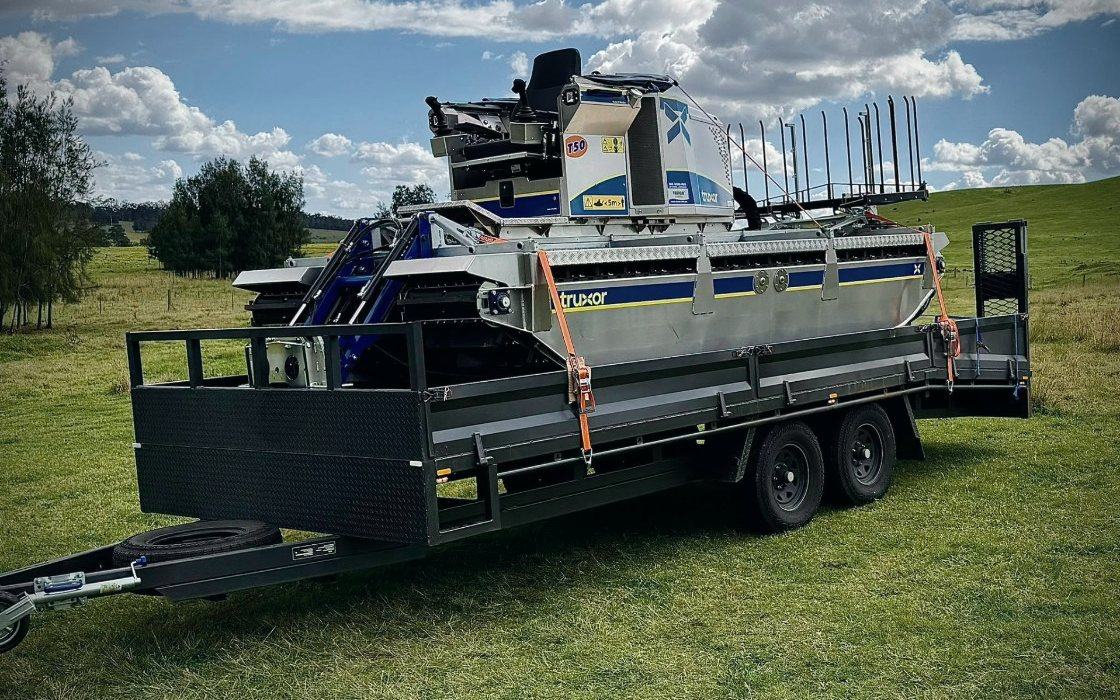
The Truxor T50 on its trailer.