Why dams are usually drained first
Most desilting is done with an excavator or bobcat working from the bank or the dry bed, so the water has to go first. Standard guidance for sediment basins describes the same approach: drain, then dig.
What draining costs you
- You go without that water until the dam refills.
- Stock and irrigation have to work around an empty dam.
- Wet silt has to dry before it can be dug.
Desilting with the water left in
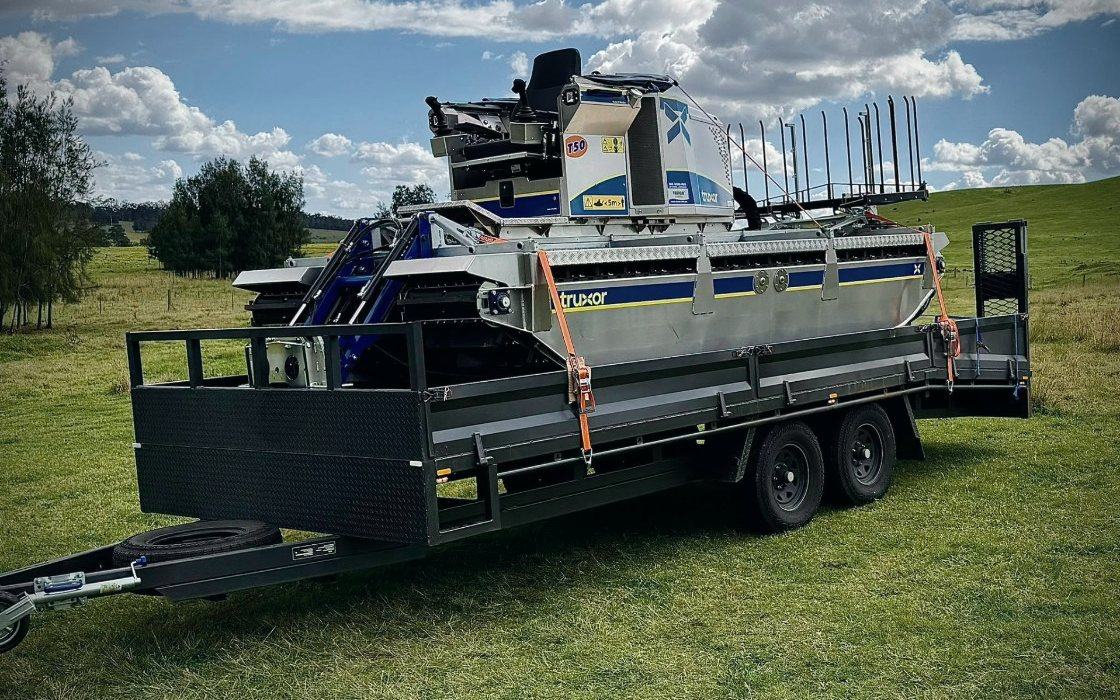
An amphibious machine like the Truxor T50 floats, so it works out on the water. Its dredge pump draws up light silt and soft organic sludge, to about 1.6 m below the surface, and pipes it to a settling area on your property (dam desilting without draining). Near the edges, a digger works to about 1 m.
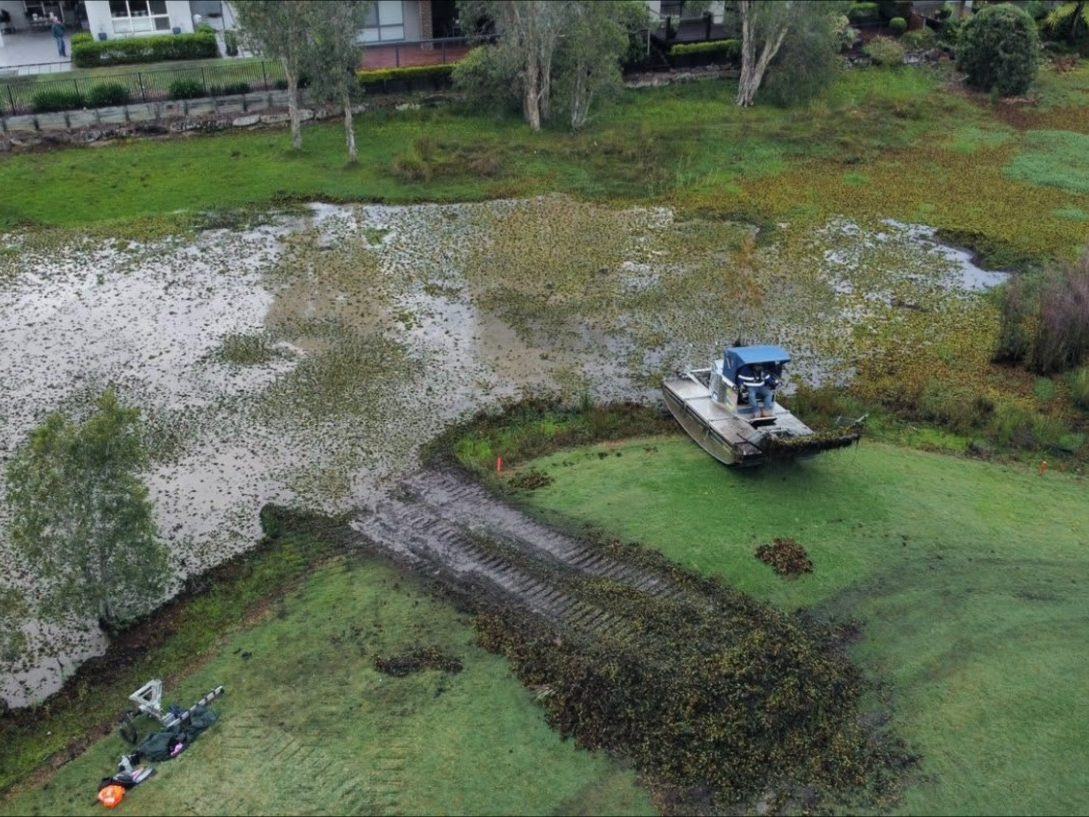
Volume drives time. On one recent golf course job, there was far more material in the dam than expected, and the Truxor spent a full day on that alone.
When draining is still the right call
A dry dam, heavy clay, very deep material or a full reshape is a job for an excavator. A good contractor will tell you which you need before you commit.
What affects the cost
The size of the dam, how much silt and weed there is, access for the machine and trailer, and where the silt can settle on your property. That is why we quote after a free site visit, in writing.
Signs your dam needs desilting
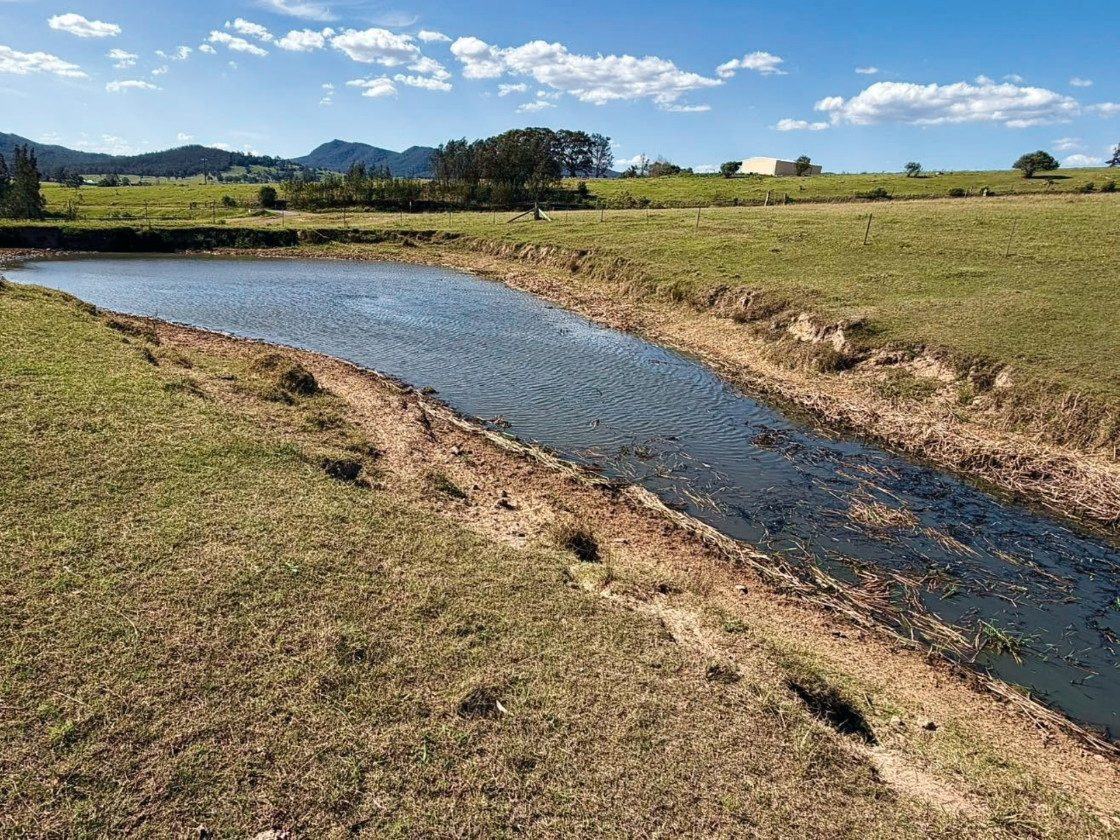
- It holds noticeably less water than it used to.
- Weed, lilies or reeds have spread across shallow areas.
- Inlets, pipes or pump intakes keep clogging.
- The water turns green or smells more often.